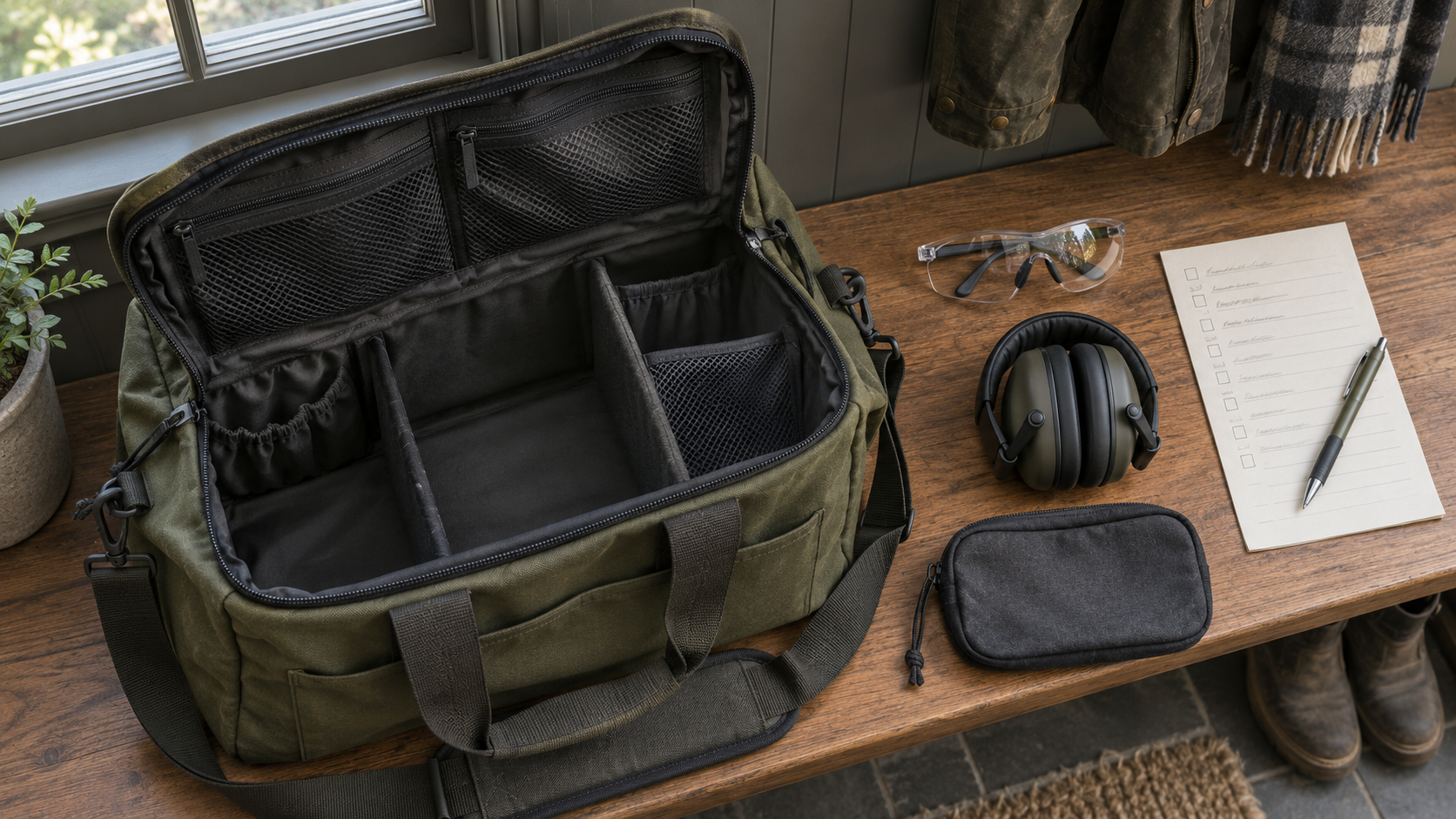
A range bag tends to collect the things you mean to deal with later. An old receipt slips into a side pocket. A lens cloth ends up under a divider. By the next visit, you’re looking for your safety glasses while the bag is already halfway out the door.
The simplest way to keep it organized is to give it a short reset when you get home. Empty every compartment, set aside gear that needs attention, and return the essentials to the same pockets. If you visit indoor ranges, where lead exposure is a concern, make the reset part of a routine that keeps range gear away from everyday household items. cdc.gov
Choose a Spot for the Reset
Pick a dedicated spot away from food preparation areas and children’s belongings. An entryway utility shelf or a designated work surface can work if the bag has a place to go immediately afterward. Avoid the kitchen table, where a range bag can end up beside groceries, lunch boxes, and schoolwork.
The CDC’s National Institute for Occupational Safety and Health (NIOSH) identifies lead exposure as a concern at firing ranges and recommends steps to limit what gets carried home. Its firing range guidance includes changing clothes and shoes before leaving the facility where possible and washing range clothing separately from family laundry. Follow your facility’s posted hygiene guidance and wash your hands before eating or touching your face. cdc.gov
Empty Every Pocket in the Same Order
Start with the outer pockets, then work through the lid, the main compartment, and any removable dividers. Keep the order the same each time. If you get interrupted halfway through, you’ll have a clear place to resume.
Look closely at the pockets you rarely use. A flat zipper pocket may hold old paperwork. A mesh pocket can catch a lens cloth in the corner. The space beneath a removable divider is easy to miss until something slides under it. If you find ammunition or other items subject to range rules, check the facility’s guidance for handling or disposal.
Set personal items aside so they return to their usual places. A membership card can go back in its designated sleeve. Your house keys can go back on their hook. The next time you want either one, you’ll know where to look.
Follow the Care Instructions for the Bag and Its Gear
Check the bag’s care label or the manufacturer’s website before using a cleaner or putting the bag in a washing machine. Canvas, coated nylon, leather trim, and padded dividers may have different care requirements. If the bag came home damp, check the seams and padded pockets and let it dry according to the care instructions before closing it up for storage.
Take a moment to look over your eye and ear protection. Put glasses back in a case that protects the lenses. Check earmuffs for obvious wear and follow the manufacturer’s instructions for cleaning or replacing parts. If something needs replacing, add it to your list while the item is in front of you. A reminder that says “replace earmuff cushions” is easier to act on than one that says “check gear.”
If you suspect lead contamination, ask the range what cleaning guidance it provides. NIOSH’s guidance focuses on limiting exposure and keeping lead from traveling into homes and vehicles. cdc.gov
Give the Essentials a Consistent Place
A bag with six pockets gives you six places to forget where you put something. Choose an arrangement you can remember, then give it a few visits before changing it.
| Item | Suggested place |
|---|---|
| Eye protection | Protective case in a pocket where it won’t be crushed |
| Earmuffs | Main compartment, away from sharp or bulky items |
| Range card and paperwork | One flat zipper pocket |
| Small accessories | A dedicated zip pouch |
| Replacement reminders | A short note on your phone |
Try retrieving the glasses and range card once you’ve packed the bag. If you have to unpack the main compartment to find either one, move it somewhere easier to reach. Keep enough room for the bag to close without pressing down on protective cases or forcing the zipper.
Catch Small Problems While the Bag Is Empty
Check the zipper pulls, shoulder strap, and seams before putting the bag away. A zipper that catches only when the bag is full may work smoothly once you remove a bulky item. A strap that’s pulling away at the stitching deserves attention before you carry the bag again.
Use the same moment to decide what can come out for good. Maybe you packed two glasses cases when you lent a pair to a friend, and both stayed in the bag. Maybe you carry a pouch of accessories you’ve stopped using. A little extra room makes it easier to see what’s inside and check the bag after each visit.
The Five-Minute Range Bag Reset
- Put the bag in its designated spot, away from food and children’s belongings.
- Check the outer pockets, lid, main compartment, and spaces beneath dividers.
- Follow the manufacturer’s care instructions for the bag and protective gear.
- Put each essential back in its usual place.
- Record anything that needs replacing before you put the bag away.
If you only have time for one improvement today, pick a permanent spot for your eye protection and range card. Those are two things you’ll be glad to find on the first try.